Under the Environmental Planning and Assessment Act 1979, State significant infrastructure (SSI) and State significant development (SSD) is development of a large scale, high economic value or having consequential social or environmental impact that is deemed to have State significance.
What is State significant infrastructure (SSI)?

SSI is infrastructure above a certain size or capital investment value, or is in a sensitive environmental location. SSI includes transport and services development with effects beyond local areas, such as:

  • rail infrastructure
  • road infrastructure
  • water storage and treatment plants
  • wharves and boating facilities.

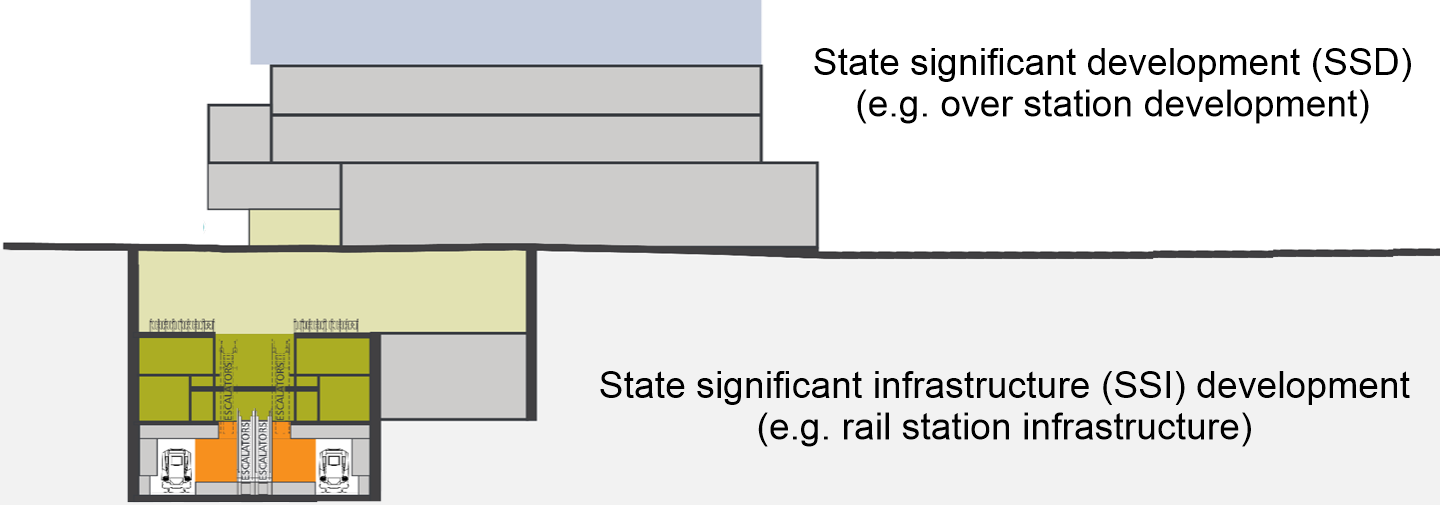
An SSI project that is essential for economic, environmental or social reasons can be classified as critical SSI and is approved by the planning minister. An SSI project can also connect to State Significant Development (SSD), or other development such as an over station development (OSD).

Over station development vs State significant infrastructure

What is State significant development (SSD)

SSD is development of buildings above a certain size or capital investment value, or is in a sensitive environmental location. SSD includes:

  • educational facilities (e.g. State schools)
  • hospitals and correctional centres
  • bus depots, airport terminals and rail workshops
  • sporting stadiums
  • tourist and recreation facilities
  • some port facilities
  • *chemical/manufacturing industries
  • *waste management facilities
  • *energy generating facilities.

*Note:  SSD that falls under the State Environmental Planning Policy (Resilience and Hazards) 2021 is to be regarded as Hazardous development which is referred to the Fire Safety Liaison Unit.

Why is SSI and SSD referred to FRNSW?

A referral to FRNSW may be required by the consent authority, pursuant to the project conditions of approval, or by the project proponent, in accordance with the project specifications.

Where a SSI or SSD proposes to incorporate performance-based design for any fire safety requirement, whether a building design having a performance solution in accordance with the National Construction Code (NCC) Volume 1 (Class 2 to 9 buildings) or other infrastructure where building codes are not applicable, FRNSW must be engaged as a stakeholder in the PBDB process. For more information, refer to FRNSW position statement - Consultation on the performance-based design brief (PBDB) document.

*Note: Development classified by an environmental planning instrument (EPI) as a hazardous development are referred to the Fire Safety Liaison Unit.

How do I consult with FRNSW on SSI?

To seek consultation with FRNSW on SSI, the relevant applicant may:

*Note: Legislated response timeframes do not apply to SSI projects, however FRNSW will endeavour to adhere to them where possible.

How do I consult with FRNSW on SSD?

To seek consultation with FRNSW on SSD, the relevant applicant may:

*Note: Legislated response timeframes may not apply to SSD projects, however FRNSW will endeavour to adhere to them where possible.

*Note: Inspections for SSD are referred to the Fire Safety Pre-Occupancy Unit.

Additional resources